
Correcting the Record: When Election Integrity Becomes a Media Target
A response to the Atlanta Journal-Constitution narrative

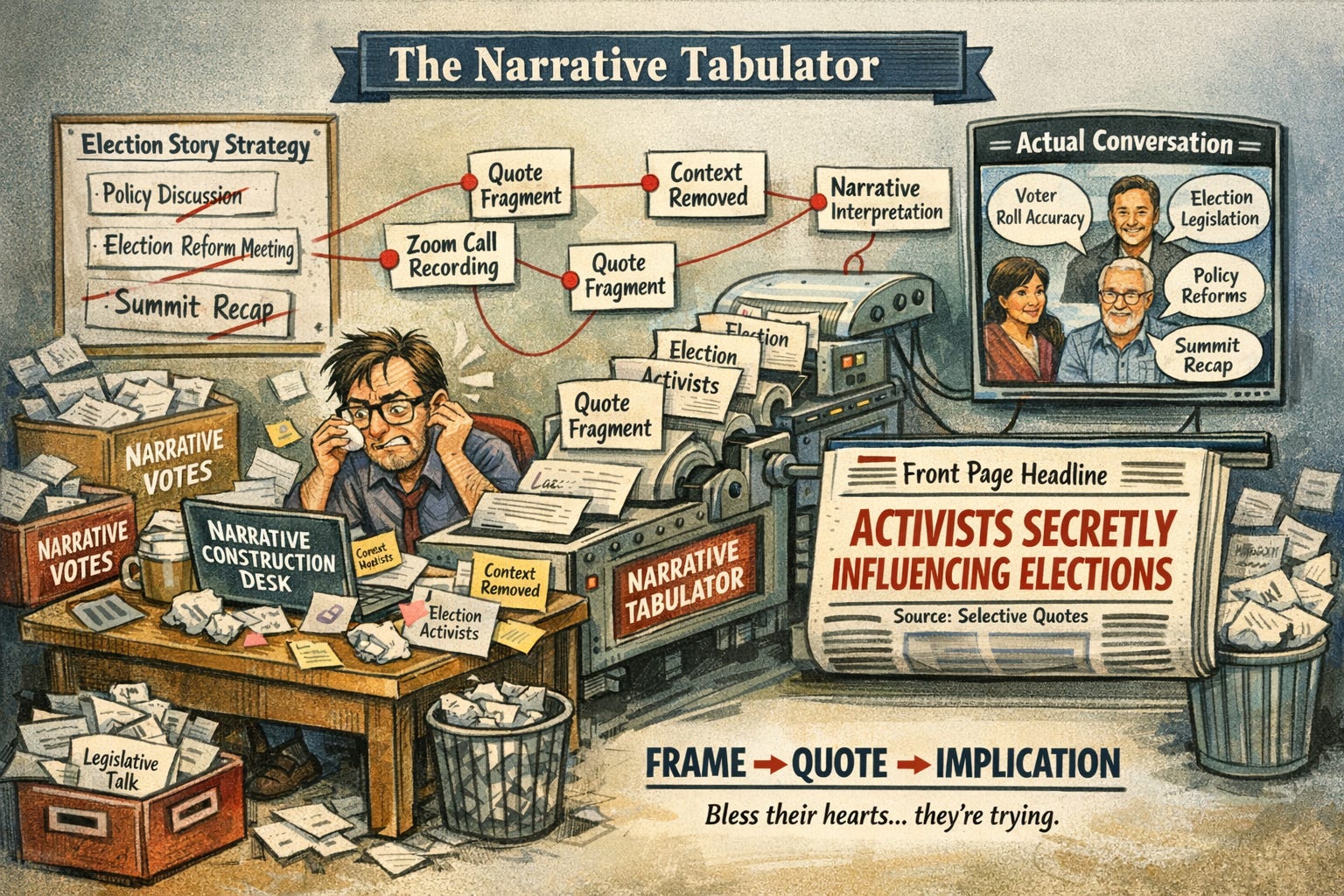
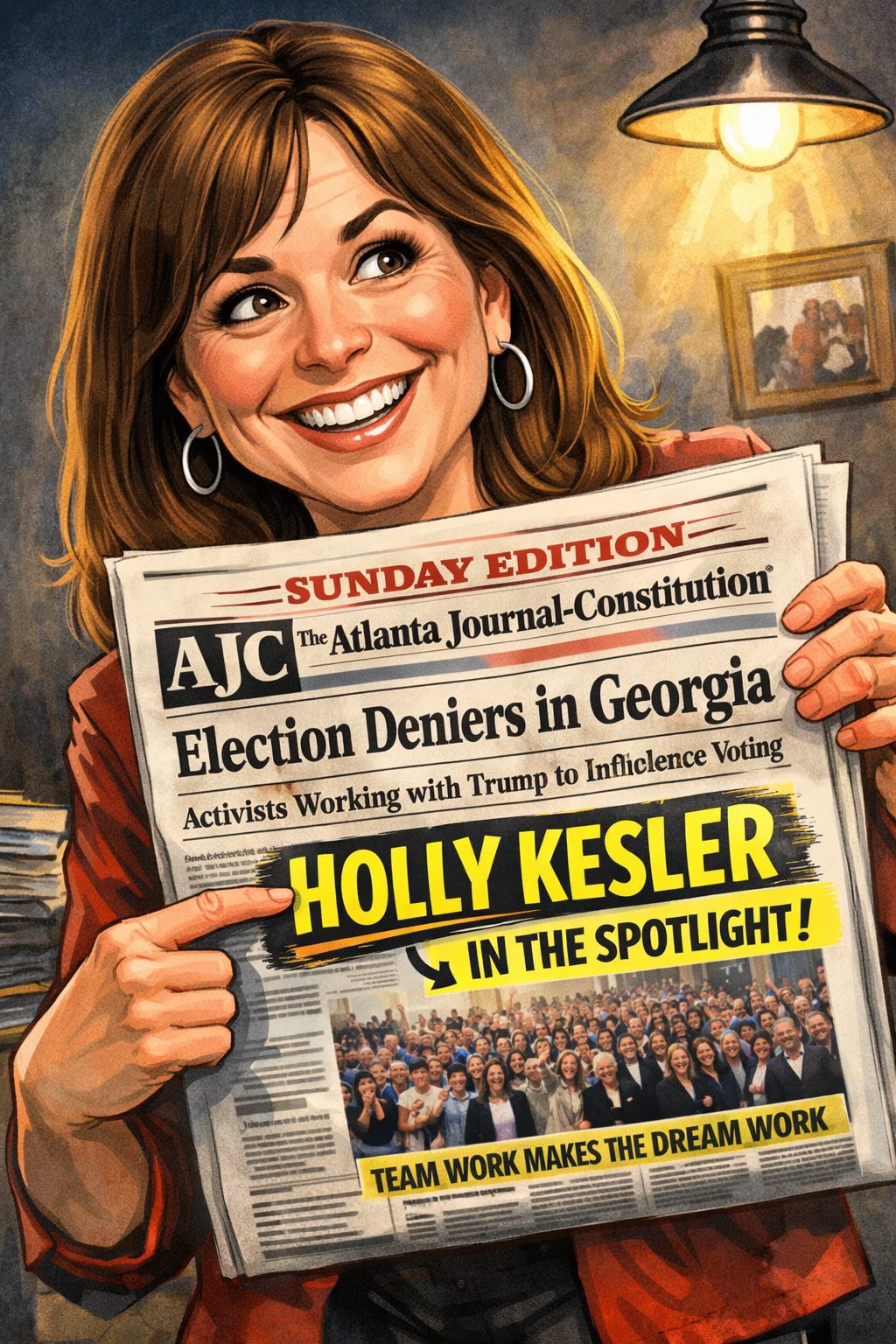
Over the weekend, the Atlanta Journal-Constitution (AJC) published an article describing several election-integrity activists — including myself — as “election deniers” supposedly working to “influence elections.”
Let’s talk about that phrase for a moment.
Because if advocating for clean voter rolls, lawful ballots, and transparent election procedures counts as “influencing elections,” then congratulations — every legislator, election official, watchdog group, and journalist in America is guilty. Including the AJC.

So let’s correct the record.
What Actually Happened
The article references a Zoom call discussing a recent Election Integrity Summit in Washington, D.C. where activists, policy experts, and researchers from around the country met to discuss election law, policy reforms, and common challenges states are facing.
During the call, participants described:
Legislative efforts to improve election administration
Data analysis related to voter rolls
Policy ideas being discussed across states
Ways grassroots groups can coordinate messaging and reform efforts
In other words — the normal work of citizens participating in democratic process.
One speaker described Georgia as a national leader in legislative election reforms since 2020, noting that dozens of improvements have been passed through the state legislature.
That doesn’t exactly sound like a secret conspiracy to ‘overthrow democracy’.
It sounds like… public policy discussion.
The Real Goal: Restoring Trust
Here’s the truth the article glosses over.
Millions of Americans — Republicans, Democrats, and independents — have concerns about aspects of election administration. Whether those concerns involve:
voter roll accuracy
chain of custody procedures
ballot verification
or transparency in counting processes
Addressing those concerns is not “undermining democracy.”
Ignoring them would be.
Confidence in elections is the foundation of a stable republic. If citizens lose trust in the process, the system itself begins to erode.
That’s exactly why activists across the country are working to strengthen election systems, not weaken them.
The Media’s Favorite Label
The AJC uses the term “election denier.” This label has become the media’s favorite rhetorical shortcut — a way to dismiss questions without engaging them. It’s much easier to attach a label than to debate policy details like:
voter roll maintenance requirements
absentee ballot verification
chain-of-custody procedures
data transparency
Those topics are complicated. Calling someone a name is easy.
What We Actually Said
One of the lines the article highlighted involved activists saying efforts could “influence the midterms.” Let’s be very clear. Yes — the goal of election-integrity advocacy is to influence elections;
Not by cheating. By limiting cheating. By ensuring:
voter rolls are accurate
illegal votes are not counted
ballots are properly verified
election laws are followed
If enforcing the law changes election outcomes, that’s not manipulation. That’s accountability.
A Quick Legal Reality Check
There is another point worth mentioning. Accusing someone of rigging elections is not a casual claim. It is an allegation of criminal conspiracy and election fraud. Ironically, many activists working to audit voter rolls or review election procedures are themselves accused of wrongdoing simply for asking questions. That inversion is remarkable.
The people advocating for transparency are portrayed as the threat to the very country they love and are working to preserve.
Documented Election Fraud Cases and Statistics in the U.S.
Overall Statistics:
A database maintained by the The Heritage Foundation lists 1,561 proven cases of election fraud in the United States that resulted in 1,325 criminal convictions across multiple decades.
These cases include:
illegal voting
double voting
absentee ballot fraud
vote buying
ballot harvesting schemes
false voter registrationsExamples of Election Fraud Cases
Some Examples on a National Scale
1. Philadelphia Ballot-Stuffing Case - Michael J. Myers
Convicted of bribing election officials to stuff ballot boxes in local races.
Sentenced to prison in 2022.
This case involved bribing poll workers to add fraudulent votes.
2. North Carolina Absentee Ballot Scheme - Leslie McCrae Dowless
Ran an illegal ballot-harvesting operation during the 2018 congressional race.
Collected absentee ballots and tampered with them.
The election result was thrown out and a new election ordered.
3. Cincinnati Double-Voting Case - Melowese Richardson
A poll worker who voted multiple times in the same election.
Sentenced to prison for illegal voting.
4. Indiana Secretary of State Conviction - Charles P. White
Convicted of voter fraud related to residency violations.
Removed from office.
5. Bridgeport Connecticut Absentee Ballot Fraud (2023–2025)
Absentee ballot misuse triggered investigations and arrests.
The election results were challenged and investigated by state authorities.
Notable Election Fraud Cases in Georgia
Dodge County Vote-Buying Scandal (1990s–2010) Location: Dodge County
One of the largest voter-fraud scandals in Georgia history occurred in Dodge County.
What happened
Local officials and campaign operatives were accused of buying votes and manipulating absentee ballots.
Investigators found ballots cast by felons and even a deceased voter.
Several elections were thrown out and re-run.
Outcome
Multiple people were convicted.
A former sheriff and deputy were sentenced for their roles in vote-buying schemes.
This case is frequently cited by prosecutors as an example of how local vote-buying operations can corrupt elections.
2. Double-Voting Prosecutions (2022 Election) Location: Fannin County
In 2024, prosecutors charged two men with felony election fraud for voting twice in the same election.
What happened
Investigators determined the individuals had registered in more than one state.
They then cast ballots in both states, which is illegal.
Outcome
Criminal charges were filed and prosecuted by the local district attorney.
Double-voting is one of the most common types of prosecuted voter fraud in the U.S.
3. Multi-Defendant Vote-Buying Conspiracy Location: Dublin
Another Georgia vote-buying case resulted in multiple prison sentences.
What happened
Political operatives were convicted of paying voters for their ballots in local races.
Outcome
Seven people received prison sentences and several others received probation.
Vote-buying historically appears most often in local elections where turnout is small and margins are tight.
4. Large Multi-Person Fraud Investigation (27 Defendants)
Georgia authorities prosecuted a major election fraud scheme involving 27 individuals.
What happened
Investigators uncovered cases involving:
double voting
felon voting
ballots cast under another person’s name
Outcome
Multiple convictions and prison sentences resulted from the investigation.

The Grassroots Movement the Media Won’t Acknowledge
What the article also missed is the scale of grassroots involvement across Georgia. Election-integrity work is not a small group of activists.
It includes:
citizen volunteers
data analysts
attorneys
poll watchers
legislators
and everyday voters who simply want transparency
These people are not extremists. They are neighbors. They are parents. They are voters. And they are exercising their constitutional right to participate in the democratic process and to preserve our constitutional republic.
Why This Matters
The real story here isn’t a Zoom call or an event in DC. It’s the growing divide between citizens asking questions and institutions that seem increasingly uncomfortable answering them. Trust in elections cannot be restored through media narratives.
It will only be restored through:
transparency
accountability
lawful procedures
and open debate
That’s the work many of us are committed to doing regardless of whether or not the AJC finds it convenient.
Final Thought
Journalists serve an important role in a healthy republic. But that role comes with responsibility. When media outlets choose framing over facts, labels over dialogue, and narratives over nuance, they risk becoming part of the very distrust they claim to report on.
And if asking questions about election systems now qualifies someone as a threat to 'democracy’…well bless your heart…you know nothing about defending the democratic process!
Thank you, Caleb Groves, for giving me the spotlight on the front page of the Sunday edition of the AJC!
Thank you for your articulate response. Name calling and invectives being thrown about are rightfully called out as cheap and easy, and do nothing to address the problems. One has to wonder about the individuals and institutions that resort to using those tactics. Because to me, they are either complicit or willfully misinformed at this point.